
When it comes to essential pieces needed for building a brand, logos and color palettes might come to mind. Creative choices. What customers see. All of that is necessary, for sure, but I specialize in another essential element that sits right behind all of those things: the strategic structure called a Brand Platform.
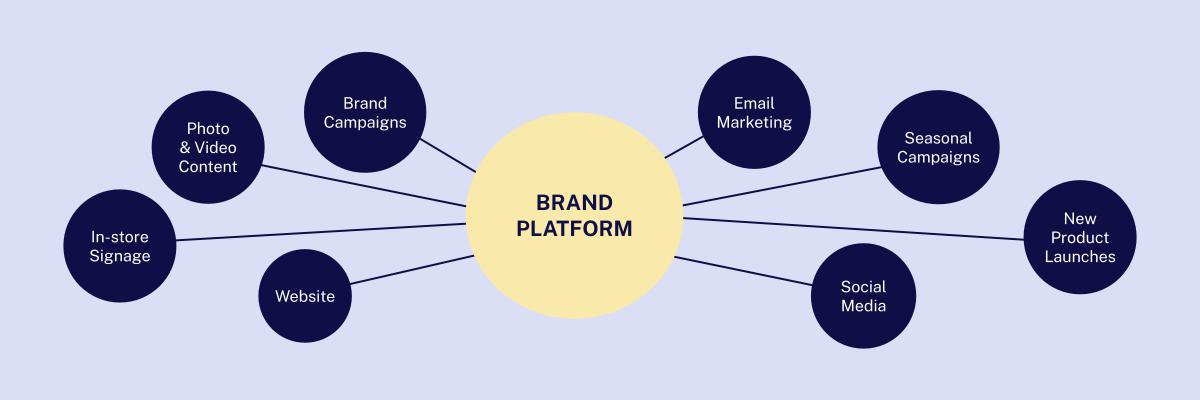
A Brand Platform informs, helps direct and connects the individual creative pieces, making the work more powerful for potential customers. It helps the brand define who they are, what they offer, and why it matters to customers – first – before any time and energy is spent on creative execution.
That internal clarity is priceless, too, when select stakeholders to come together to inform the Brand Platform (via research and interviews) or ultimately are included in the approval process. The goal is for all corners of the company to use the Brand Platform to guide their plans and decisions.
The Brand Platform itself looks deceptively simple. It’s rows and columns on a single piece of paper with probably fewer than 75 words total.
Let’s talk about what goes into it, section by section.
BRAND PLATFORM: POV
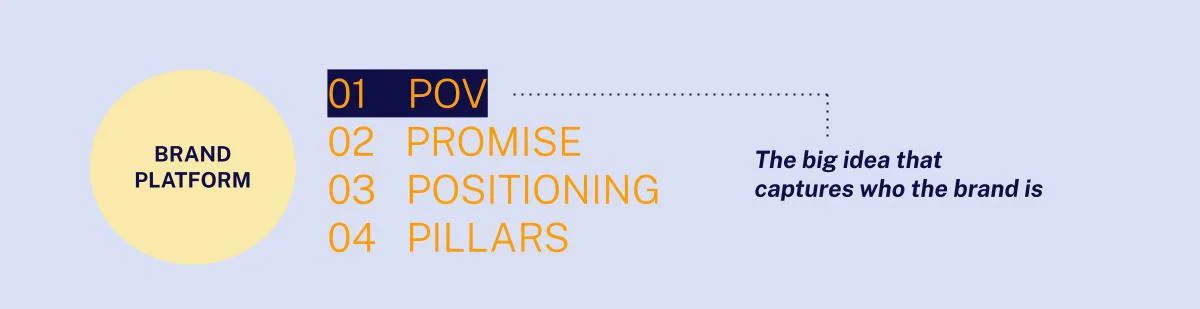
At the top of the Brand Platform structure is your brand’s POV.
It’s a short phrase that captures the big idea of who the brand is, its understanding of the world, and the space it seeks to occupy within that world. It’s usually a couple of words, and it’s great when there’s some inherent tension between the words that makes the offering feel new, fresh and different.
Some examples can be:
Modern Heritage.
Playful Precision.
Elevated Everydays.
Each of these POV’s take something familiar and give it a twist. Hopefully your company offers a fresh take like that, too. (And, if not, let’s talk more.)
It’s important to understand the POV is not consumer-facing copy. It’s not a tagline, a mission statement, or a lower-level attribute. This is simply the company understanding itself and getting excited about what it brings to the table.
BRAND PLATFORM: PROMISE
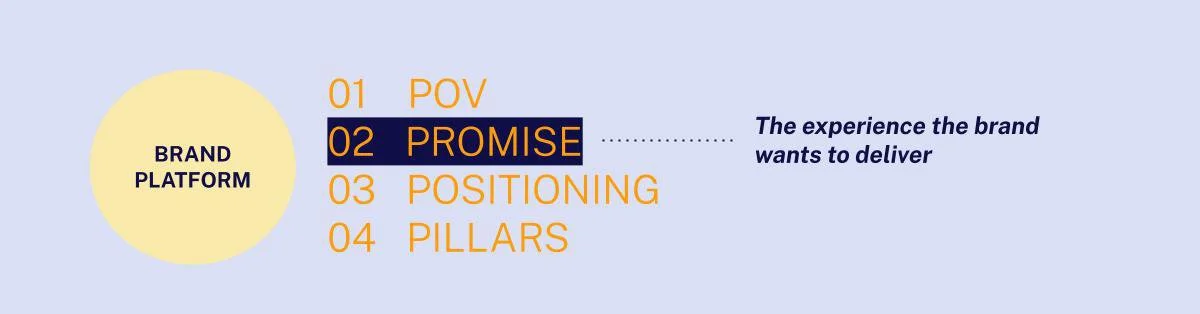
That leads us to the Brand Promise, which explains the POV in a few short sentences. To build on an example above, the promise for a brand that focuses on “Elevated Everydays” might be:
For us, life is anything but ordinary. We’re here to turn ordinary routines into extraordinary experiences that feel more memorable, meaningful, and fun.
This statement is about the experience the brand wants to deliver. It’s still high-level. It describes the outcome, and not the methods used to create it. That part will be handled elsewhere.
Brand Platform: Positioning
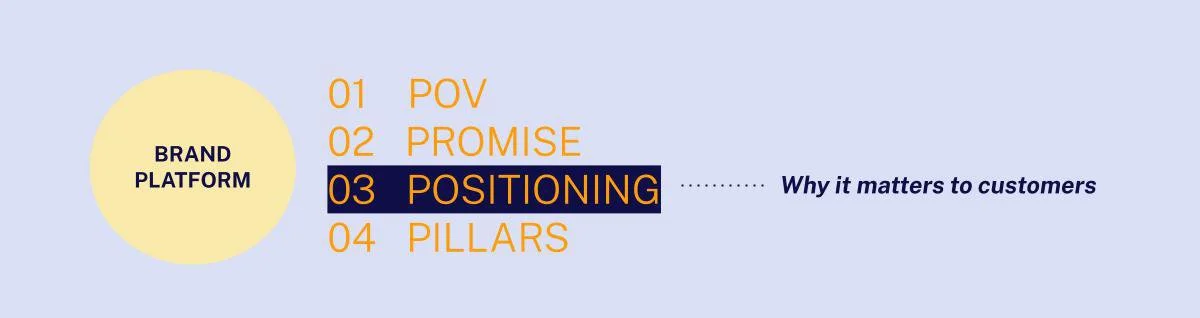
This short statement (again, just a couple of sentences) describes how your brand is different from competitors and why this is needed in today’s market. It answers why your brand’s unique POV and Promise actually matters to customers.
The fictional positioning for “Elevated Everydays” might look like this:
Today’s home enthusiasts want everything they live with to feel personal, beautiful and considered — without spending a fortune. Our kitchen essentials, cleaning tools and home organizing products bring design and function together at an accessible price, so the things they use every day can be as distinctive and special as they are.
The Positioning statement speaks to customers’ wants and needs and how the brand meets those needs. (This consumer insight would’ve come in the research phase prior to the development of the Brand Platform.)
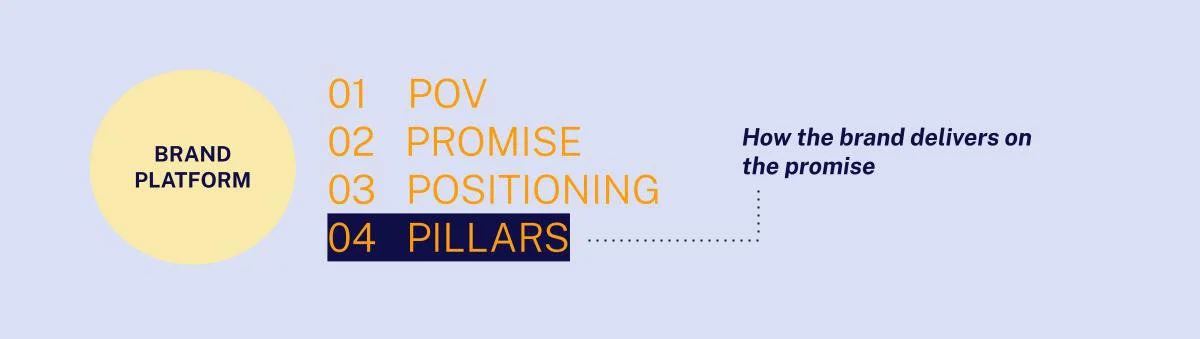
Brand Platform: Pillars
The final section, Brand Pillars, is probably my favorite. It answers “how” your brand is going to deliver on all of the things you’ve said so far. The Brand Pillars also inform your creative most directly, so fun concepts and phrases might start coming to your mind as you develop this section.
The Brand Pillars for “Elevated Everydays” might be this:
PILLAR 1: DESIGN. Short narrative statements would follow each Pillar to give more detail about what it means. The design of this brand, as we’ve imagined it, is probably sleek and modern or maybe fun and colorful. Those details would go here.
PILLAR 2: LOW PRICE. If it’s not the absolute lowest price, “Value” would be a good pillar here.
PILLAR 3: DURABILITY. This would be nice to have, if they could swing it. It speaks to Materials (which could also be a Pillar on its own) but in a way that connects with what it means for customers.
You should aim to have only three pillars. That’s all that your marketing calendar and tactics can handle, I’ve seen. Anything else will just be words on an About Us page – that’s clutter that may even cause confusion.
At this point, with the four sections of the Brand Platform filled out, you would have a very compelling and powerful (but short and easy to understand) picture of Who You Are, What You Offer, and Why You Matter.
Now, it’s time to bring it all to life with your creative choices.
