
As you can see already, the Brand Platform drives a tremendous amount of clarity for internal stakeholders. It allows the entire company to align and rally around the most transformative aspects of who it is and why it matters.
We have to make sure the momentum doesn’t stop there, though. We want potential customers to know these things, so they’ll choose you time and time again. The first group to help achieve this will be creative teams. They will use the Brand Platform to inform and inspire all of their visuals, copy, concepts and tactics — all the things a customer sees and interacts with.
When the creative aligns beautifully with the Brand Platform, it’s powerful. It’s clarity in action.
Pottery Barn does a great job at this. Let’s look how they do it.
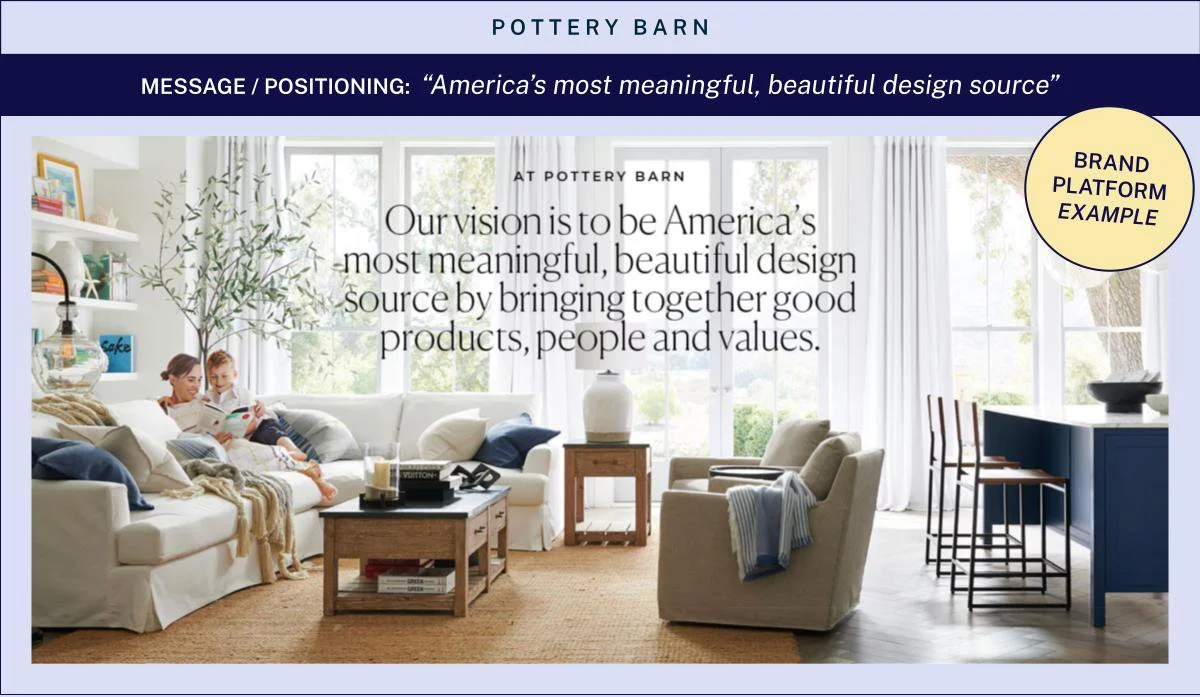
First, it’s great that Pottery Barn even has an About Us page on its site, where it tells customers who they want to be — “America’s most meaningful, beautiful design source” — and how they aim to do that, through “good products, people and values.”
But the insight into what drives them doesn’t stop there. Right below that is a neat little collection of words that function, even visually on the page, as Brand Pillars.
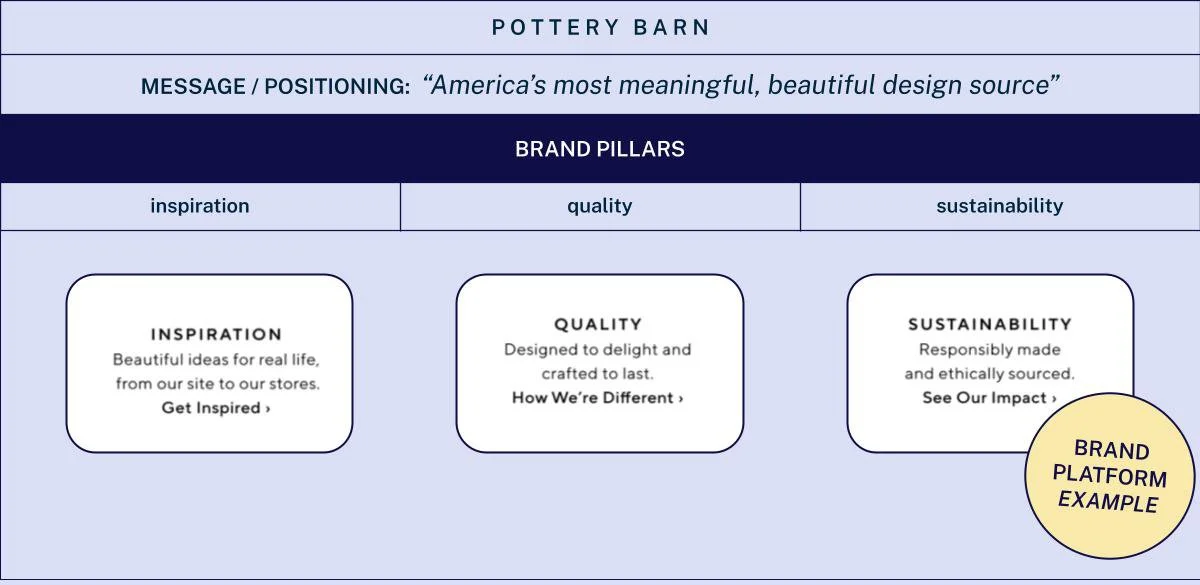
Inspiration, Quality, and Sustainability are the top three priorities for Pottery Barn. These Brand Pillars describe how they fulfill their mission of being “America’s most meaningful, beautiful design source.” (There’s a fourth on the page, “Service,” but it speaks mainly to the in-store, design help, and ordering process. It’s an important area, but is one the primary marketing wouldn’t demonstrate most directly, so we’ll leave it on the side.)
Now, let’s see how the Brand Pillars aren’t just words on-a-page, but how they clearly inform and inspire so many different choices the brand makes throughout its marketing channels.
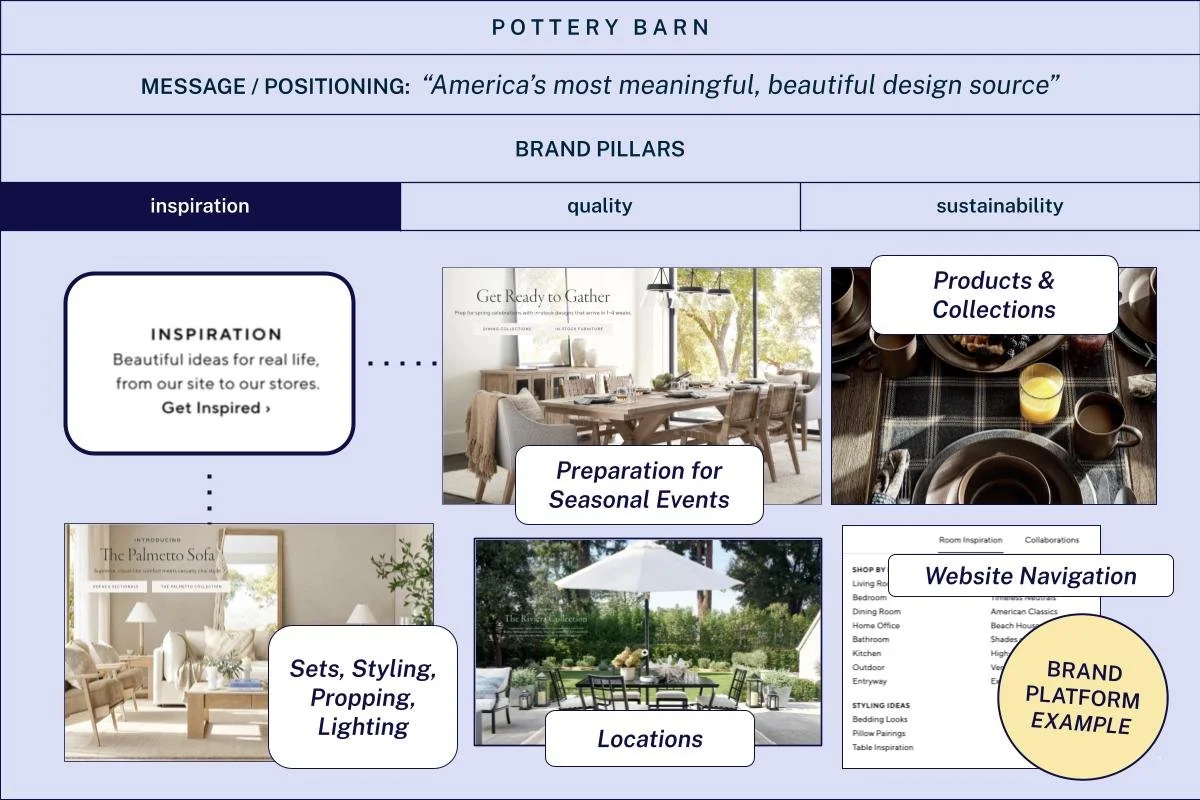
The Inspiration Brand Pillar comes to life in many ways:
Product Development: The products are inspired & they can inspire you to create meaningful moments of your own. In the example above, not everyone can enjoy “Coffee at the Cabin,” but a set of handcrafted stoneware plates, plaid linens, and napkin rings “inspired by antique belt buckles” give you this experience, no matter where you live.
Website Structure & Navigation: “Room Inspiration” is the first nav button you see on the site. From there, you can shop by room or style or get styling ideas. It’s exactly the first thing you should see from a brand that wants to be your “most meaningful design source.”
Photography: This all-important content type has inspiration woven throughout, from the type of sets and locations they utilize to the propping and styling decisions they make there. Imagine the effort and expense involved in PB photography. It’s one that hasn’t been cut much over the years, even in the digital age, because PB is clear that its photos are the #1 way it inspires customers and sells products.
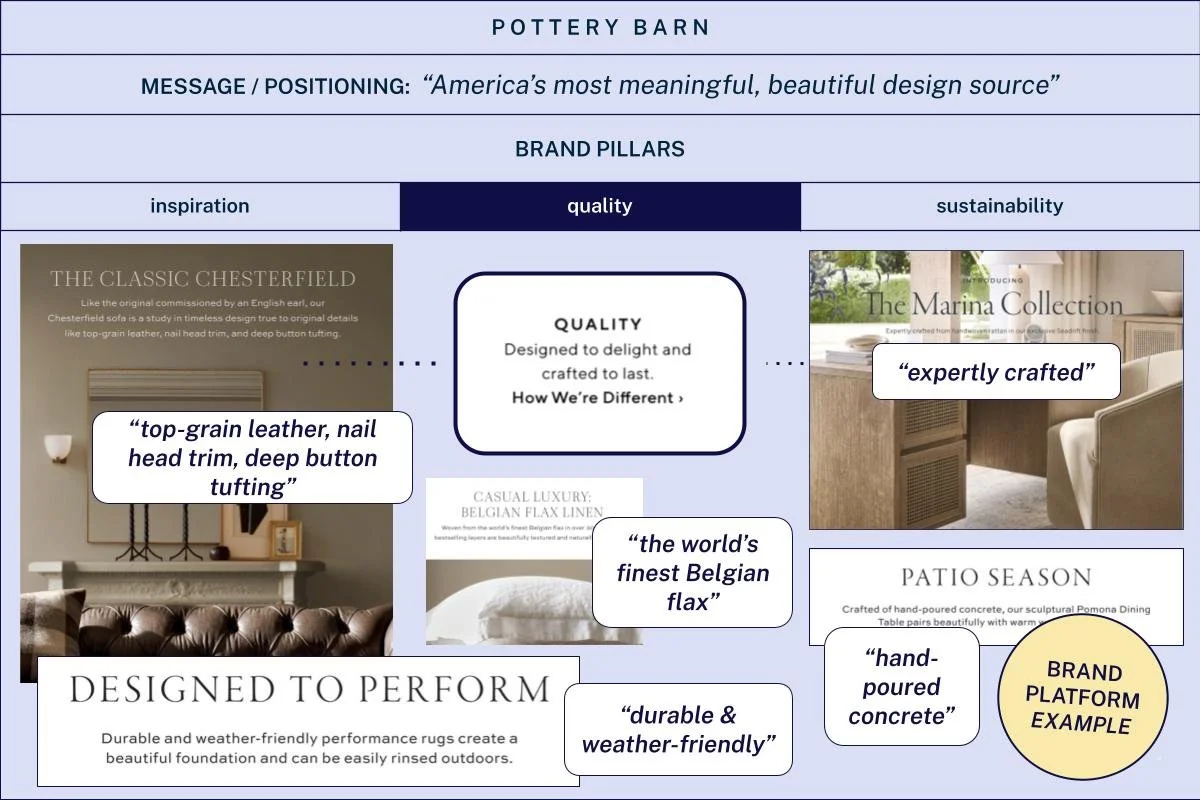
The Quality Brand Pillar works well for Pottery Barn because they can back it up; it’s not a story they have to fabricate. And there’s also two dimensions to it, which makes it even stronger. Quality speaks to 1) materials used and 2) the craftsmanship behind it all. Both are aspects that are difficult to fake (the details speak for themselves) and very ownable for the brand.
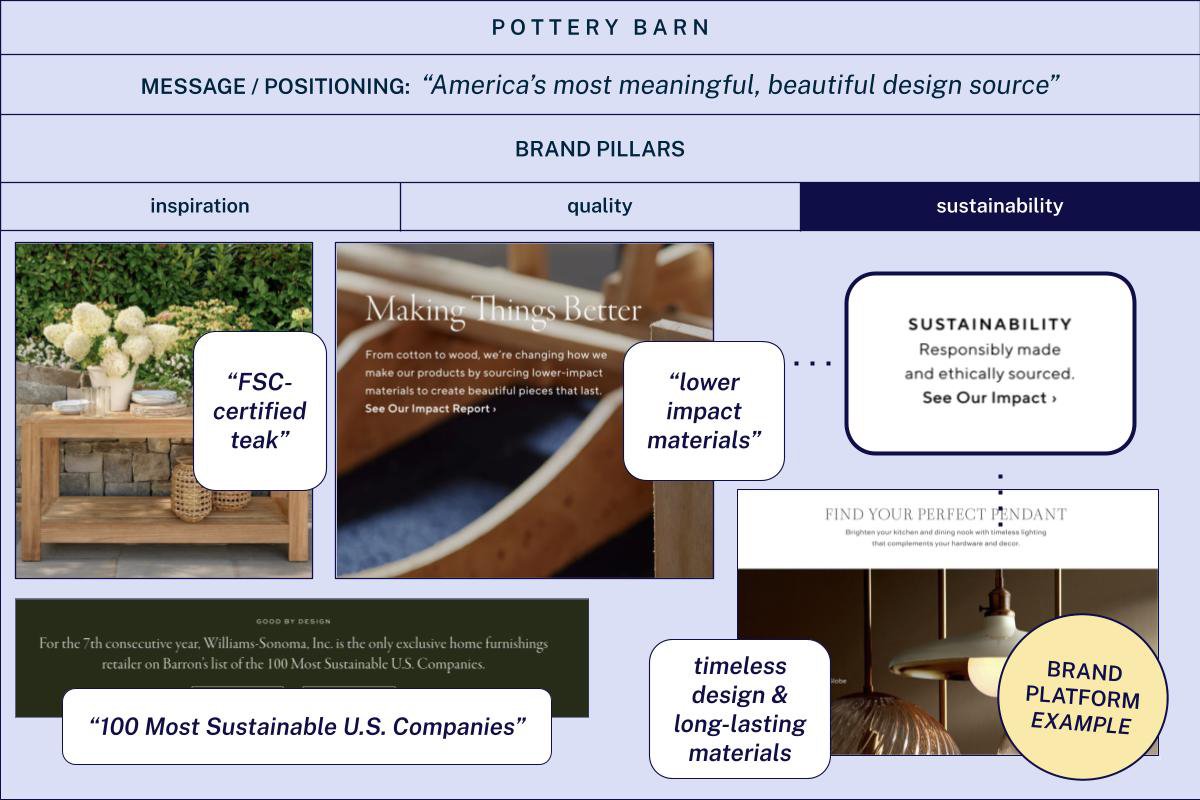
Last up — the Sustainability Brand Pillar. It also has a couple of facets that are important because they do double-duty to appeal to customers who may not be as concerned with the more direct “environmental impact” angle.
“FSC-certified teak” also speaks to the quality of the materials and the thoughtfulness of the design process. Aspects like “Timeless design” connects to sustainability (you won’t buy and replace this item often and create more waste) but also to style.
———
All together, the strong story the Brand Pillars weave are convincing and ladder up directly to the bigger idea of “design source,” Pottery Barn’s overall Brand Promise.
The result is a clear, consistent, inspiring shopping experience, no matter which channel of theirs you’re looking at.
